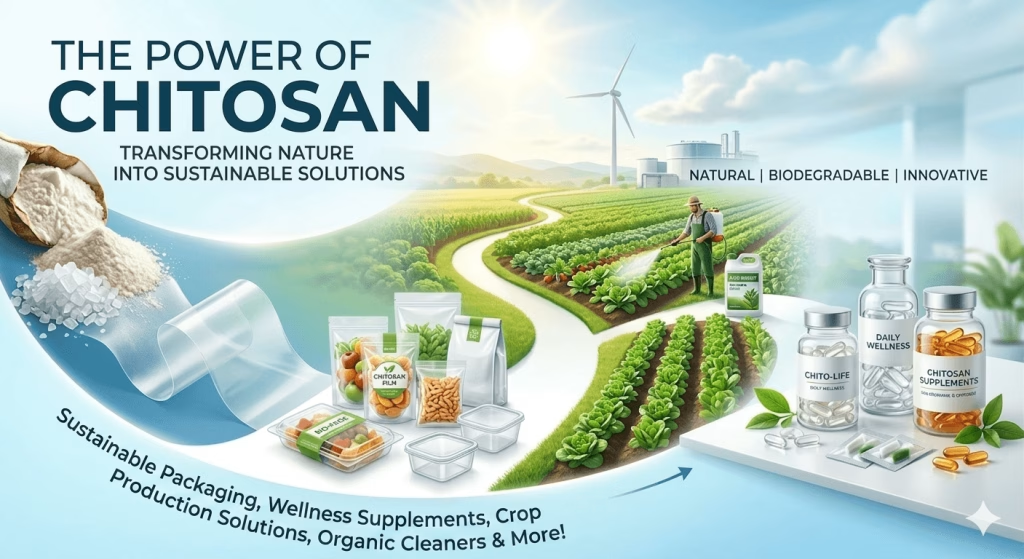
Chitosan Biopolymer: The Versatile Sustainable Material Powering ECS Solutions
In the quest for truly sustainable alternatives to petroleum-based plastics and synthetic materials, few substances match the versatility, performance, and environmental credentials of
chitosan biopolymer. At Earth Conscious Solutions (ECS), we harness this remarkable material through our partnership with
Chitosan Global to deliver practical, scalable solutions that eliminate microplastics, support regenerative agriculture, extend food shelf life, and promote human wellness.
Whether you are a manufacturer seeking biodegradable packaging, an agricultural operation looking to improve soil health, or a consumer exploring natural supplements, chitosan offers a science-backed pathway forward.
What Is Chitosan Biopolymer?
Chitosan is a natural polysaccharide derived from chitin, the second most abundant biopolymer on Earth after cellulose. Chitin is found in the exoskeletons of crustaceans (shrimp, crab, lobster), insect cuticles, and the cell walls of fungi. Through a controlled deacetylation process, chitin transforms into chitosan — a cationic (positively charged) biopolymer with unique chemical reactivity.
Key Chemical Properties:
- Linear copolymer of D-glucosamine and N-acetyl-D-glucosamine units
- High degree of deacetylation (typically 70-95%)
- Reactive amino (-NH₂) and hydroxyl (-OH) groups
- Soluble in mild acidic solutions
- Film-forming, antimicrobial, and chelating capabilities
Unlike many synthetic polymers, chitosan is
biocompatible, non-toxic, and fully biodegradable by enzymes such as lysozyme and chitinase, breaking down into harmless glucosamine units that integrate into natural carbon cycles.
Sources of Chitosan: Marine, Fungal, and Beyond
Marine (Sea Source): Traditionally derived from seafood processing waste (shrimp and crab shells). This upcycles what would otherwise be discarded and provides high-purity material.
Fungal / Plant-Based: Produced from mushroom or fungal cell walls. These sources are vegan, offer more consistent molecular weight, and appeal to allergen-sensitive or ethical markets.
At ECS and Chitosan Global, we work with both marine and fungal sources to match the exact needs of each industry.
Core Properties That Make Chitosan Exceptional
- Antimicrobial Activity — Disrupts bacterial cell membranes, effective against a wide range of bacteria, fungi, and yeasts.
- Film-Forming Ability — Creates strong, flexible, transparent films ideal for packaging.
- Biodegradability — Degrades in soil, compost, and marine environments far faster than conventional plastics, often within weeks to months without leaving microplastics. Learn more about how our solutions accelerate polymer biodegradation in our guide to microplastic elimination and bioplastic blends.
- Chelating & Adsorbent Power — Binds heavy metals, dyes, and pollutants.
- Biocompatibility — Safe for human contact, wound healing, and edible applications.
- Antioxidant & Fat-Binding — Supports wellness applications.
Chitosan in Sustainable Packaging: A Plastic Alternative That Works
One of the most promising applications is
chitosan-based food packaging. Chitosan films act as excellent oxygen and moisture barriers while providing active antimicrobial protection that extends shelf life of fresh produce, meat, seafood, and ready-to-eat foods.
Benefits for Franchises, Retail, and Foodservice:
- Reduces food waste
- Replaces single-use plastics
- Compostable or soil-biodegradable end-of-life
- Maintains food safety and quality
Discover how this integrates with our broader
sustainable packaging solutions for franchises and high-volume facilities.
Agricultural & Soil Regeneration Applications
Chitosan Global’s specialized formulations support large-scale agriculture through crop protection, seed coating,
soil remediation, and more. These solutions work synergistically with our
BioCharNow soil regeneration products and carbon-negative fillers.
Wellness & Supplement Applications
Consumer interest in chitosan remains very high. As a natural fat binder, it is widely used in supplements for weight management, cholesterol balance, gut health, and immune support.
For detailed information on wellness applications, read our article:
What Does Chitosan Do for the Body? A Comprehensive Natural Wellness Guide.
Chitosan vs. Traditional Plastics: A Clear Winner for the Planet
| Aspect |
Traditional Plastics |
Chitosan Biopolymer |
| Source |
Petroleum |
Renewable (seafood waste/fungi) |
| Biodegradability |
Centuries (microplastics) |
Weeks to months |
| Microplastic Legacy |
High |
None |
| Antimicrobial |
No |
Yes (inherent) |
| End-of-Life |
Landfill/incineration |
Compost/soil beneficial |
Why Partner with ECS & Chitosan Global?
Earth Conscious Solutions brings together Chitosan Global’s high-performance materials with our broader portfolio of
carbon-negative materials and fillers and
Ecolosynergy nanomembranes.
Implementation Guide: Getting Started with Chitosan Solutions
- Assessment — Evaluate current packaging, agricultural, or material needs.
- Material Selection — Match grade and source to your requirements.
- Testing & Pilots — Shelf-life studies, field trials, or formulation compatibility.
- Scaling — Full integration with existing operations.
- Measurement — Track waste reduction, carbon savings, and performance metrics.
The Future of Chitosan Innovation
Ongoing research focuses on enhanced mechanical properties, plant/fungal source optimization, smart packaging, and advanced
water treatment systems. ECS remains at the forefront of these innovations.
Conclusion: A Material That Aligns with a Regenerative Future
Chitosan biopolymer exemplifies what sustainable innovation should be: effective, scalable, and genuinely beneficial for people and the planet.
Ready to explore chitosan solutions for your needs?
Request a Consultation or Sample →
Frequently Asked Questions
Is chitosan biodegradable?
Yes. Chitosan films typically biodegrade in soil or compost within weeks to months without forming harmful microplastics.
Is chitosan safe for food contact?
Yes. Food-grade chitosan is FDA-recognized as safe and widely used in edible films and coatings.
What is the difference between marine and fungal chitosan?
Marine sources offer high volume and proven performance; fungal sources are vegan and often preferred for allergen-free applications.
Further Reading & Scientific References